Friday, September 7, 2012

Astolpho and the Hippogriff


Ever since childhood I have been fascinated and enchanted by the heraldry and pageantry of medieval costumes.  Studying medieval and gothic romance literature in college only deepened my love for the aesthetic of knighthood.  The epic poem of Orlando Furioso by Ariostos has been a favorite story of mine for over a decade and from time to time I re-engage with the fable for inspiration.  This image illustrates the paladin Astolpho and the magical hippogriff he rides on his various adventures in that story.

Enjoy.

WOC


Below are a detail and wip image, plus some historical images of the same subject....enjoy.


Sunday, July 22, 2012

Wargriffin


Wargriffin is the story of a young girl who disguises herself as a boy in order to join in WWI wit her griffin.  A young adult fantasy-adventure novel.  This was a fun story to illustrate trying to capture the bleakness of the western front with the fantasy of dragons and mythical beasts.  I'm attaching my sketch and mock-up cover for the book.

Enjoy.

WOC


©William O'Connor Studios

Sunday, June 3, 2012

Dracopedia Student Art Contest


With the release of Dracopedia:The Great Dragons coming out this month I thought I would celebrate by having an art contest for students. A great opportunity for young artists to get their work seen and win some cool prizes.

Guest Judges are: Lars Grant-West, Dan Dos Santos and Todd Lockwood.

Go to: The Dracopedia Project to join and learn all the details.

WOC

Tuesday, May 29, 2012

War of the Dragonborn


On May 21st the publisher of the videogame Skyrim filed a trademark request for the word "Dragonborn".

In 2007 I was called out to the Wizards of the Coast D&D offices in Renton Washington to help concept this race and so I feel a particular fondness for the scaly brutes, kind of like a godfather. I remember struggling with the design because it could not have any draconic features (horns, wings, tails, long necks, etc.) and it was looking too much like reptile men.  I finally pulled from more of a cultural context than a visual one.  I thought of a cross between Klingons and the Gorillas from Planet of the Apes, but Dragon-Men!, and the rest drew itself.  I've always liked them, (except for the Boobs.  You try having heated debate  in an office board room on why Dragons don't have breasts, and you realize how surreal this job is.)Also, I conceived that this race would be steeped in ancient tradition and tribal custom.  For that I drew upon an Asian aesthetic to their costuming.  Overlapping scales and plates, with no use of buckles would make them look different and older than the other races.

Both companies have a rightful claim to trademark anything they want.  WotC was there first, but it doesn't possess a trademark, and its likely that Skyrim's trademark will not effect D&D.  If Skyrim's trademark effects D&D then this race will go extinct in 5th Edition. To whoever wins the War of the Dragonborn I wanted to share a few images from their inception during the early development of 4th Edition.  My little dragon babies, they grow up so fast!

Enjoy. (click on images for larger view)

If you have any questions about the concepting of this race, please leave a comment.

WOC


Thursday, April 26, 2012

Artist of the Month-Caspar David Friedrich

"The Abbey in the Oakwood"
1810
oil on canvas.
National Gallery , Berlin

A ny one who has been following my Artist of the Month series will notice a trend.  Its something that I didn't notice it until I looked back over my blogs.  A preference for landscapes.  Corot, Keifer, Sloan, Hasui.  I think this is because I so rarely get commissioned to do landscapes and I have a passion for the outdoors, hiking and all things that grow.  When left to my own devices I prefer to paint landscapes either fantasy or plein aire.  This leads me to the master landscape artist Caspar David Friedrich., (1774-1840).


There are so many excellent landscape painters in history, (Gainsborough, Turner, Rembrandt, Vermeer, et al.), but for me it is the Romantic overtones that makes Friedrich's work so powerful.  These are not merely landscapes.  In the tradition of other Romantic artists like Wordsworth, Keats and Beethoven, Friedrich's work does not extol the glory of the church, the greatness of his patrons or the virtuosic talent of the artist, he is illustrating the titanic power of nature and how minuscule we mere mortals are when confronted by it.  Lonely and destitute penitents move like wraiths between the tombstones in the shadows of a once glorious cathedral ravished by the supreme power of Time.   The lattice of windows is mundane in comparison to the shapes of the tree branches. The mightiest ships of the greatest empires are crushed like toys in the ragged jaws of ice flows.  The spires of a church pale in comparison to the Divine beauty of nature's own spires.

Friedrich's compositions at once show us the beauty and devastating power of nature, the complex grace that can be discovered in a simple study of a tree, and our place in this Great Masterpiece.

Enjoy. (click on thumbnails for larger versions)

WOC    


"A Man and a Woman Contemplating the Moon"
1830
Oil on Canvas.  
National Gallery, Berlin


"Study of a Tree"
1806
Pencil on paper


Listen to Beethoven's Moonlight Sonata (1801) for a better understanding of Friedrich.


Wednesday, February 15, 2012

Flight of the Paladin


A brave and stalwart paladin riding his steed into battle against a rampaging fire breathing dragon! The classics are always the most fun.

This recent project made for an excellent example of my process and I thought I would share some of that with you.

For a full, streaming evolution watch the painting unfold on video:


©2012 William O'Connor Studios

Monday, January 16, 2012

Varnishing Day

As we all know the deadline for entries into Spectrum: The Best in Contemporary Fantasy Art is coming up fast. I just got my entries off today. I am a huge fan of this publication, have been in it many times and think it is a showcase of some of the best artists of our generation. That said, there has developed an almost mythological quality to this annual. Artists rushing about frantically trying to get work finished before the deadline, sleeplessly going over what to submit, what to leave out, then waiting with bated breath to see if they got in. Careers have been made in Spectrum. At the same time there are artists who refuse to enter. They feel it is too political, too random to place that much credit upon a small group of subjective jurists.

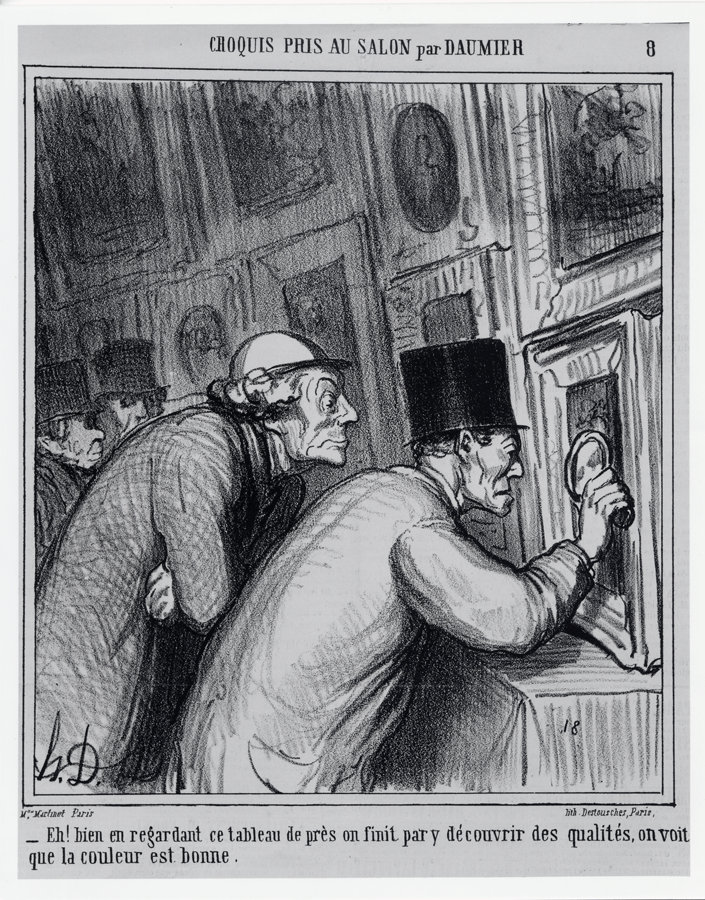
Whatever side of the fence you fall on, this time of year always reminds me of Varnishing Day. Varnishing Day was the most important day in the artistic calendar of the Academic Salon artist. It was the last day that artists could make final alterations to their work before the Salon would open to the public and the judges would cast their ballots. The entire year for an artist came down to this one show! If you got in and won an award it would make your year in sales and commissions. If you won the Grand Prix it would make your career! The better you did at the show the better your sales, the better your sales the more students you got in your workshops. The more students you got the better your print sales and the better you would do in the show next year, and around and around. This academic salon system became so ingrained in the culture that to be an artist you could not work outside the academies. Famous artists like Manet and Delacroix bristled at the Salon System, but tried to work within it. By the late 19th Century the younger generation of artists had had enough of the politics and began to display their works in alternative shows.

In 1873 a group of Franco-Prussian War veterans and conscientious objectors who had fled to England returned to Paris and were refused entry into the Salon. Being a bunch of twenty-something post grads who didn't know any better they got together, rented some cheap space and put on their own show. That group included Pissaro, Monet and Degas among others. This group sardonically called themselves The Refused, but were ridiculed by the establishment as The Impressionists. (This could be likened to being called The Doodlers, today.)

This revolution of individual artist's freedom to work outside the academy and the academy's standards changes art forever. By the end of the 19th Century the academic salon system had grown so big and political that it could not evolve with modernity, and like the dinosaur it was, went extinct. In 1893 one critic reviewing the art salon at the World Columbian Exhibition in Chicago containing the works of such Victorian luminaries as Bouguereau, Leighton and Waterhouse remarked, "This exhibition has done more to set back the advancement of art than any event in the past twenty years."

In 1913 The New York Armory Show would seal the coffin on the Victorian Salon System and give way to the twentieth century modern Gallery System. An exhibition by artists and for artists. You can see by the poster left that the artists are referred to as "guests", this was a private invitational exhibit, not a state funded juried show. Instead of paintings shoehorned together like a patchwork,"salon-style" each painting would be displayed by itself, "gallery-style". Instead of one huge institutional juried show there would be hundreds of little independent private shows run by the artists themselves. Each small "ism" could find its own niche, and its own followers. These would become the model for today's successful trade shows like Comic Con and Illuxcon.

In the 21st Century this evolution has continued. The Gallery System is now under threat by artist-run websites. Today artists do not even need the galleries or publishing houses gathering millions of followers on-line circumventing the exclusivity of the galleries. Today there is a venue for any kind of art you can imagine and you can follow along directly with the artist. Whether this is a better system is arguable. A direct Democracy of Art where page views and followers equates to quality, or is there still a role for the juried show in contemporary art? Check back in a hundred years and I'll tell you how it turned out.

So this week as you put the final touches of varnish on your painting for selection in the Spectrum Show lets all remember how far we've come, and where the future may take us!

Enjoy.

WOC